My Trip to Tver
Motivation
I had long wanted to make a trip to Russia to the places where my family lived before fate led them to the Yekaterinoslav Governorate, but apparently the time came only now.
The story of this trip has its origins in my decision to once and for all sort out my family's genealogical tree, answer the questions "who?", "what?", "from where?", "when?" and "why?" and so on, and explore the matter as deeply as possible.
When I was 15 years old and it was time to get a passport, my grandfather – one of the people who often figured in my childhood and did a lot for me – told me to take the double surname Prokhorenko-Natucci, and not just my father's surname – Prokhorenko. My grandfather's name is Alexander Alexandrovich Natucci, and his daughter – my mother – also did not change her surname upon marriage and remained Natalia Alexandrovna Natucci until her death in 2004. Being a poorly brought up, or rather, completely uneducated child, I naturally didn't listen to him and did nothing to get a passport with a double surname, and my grandfather was very unhappy about this, but at that time it didn't bother me very much.
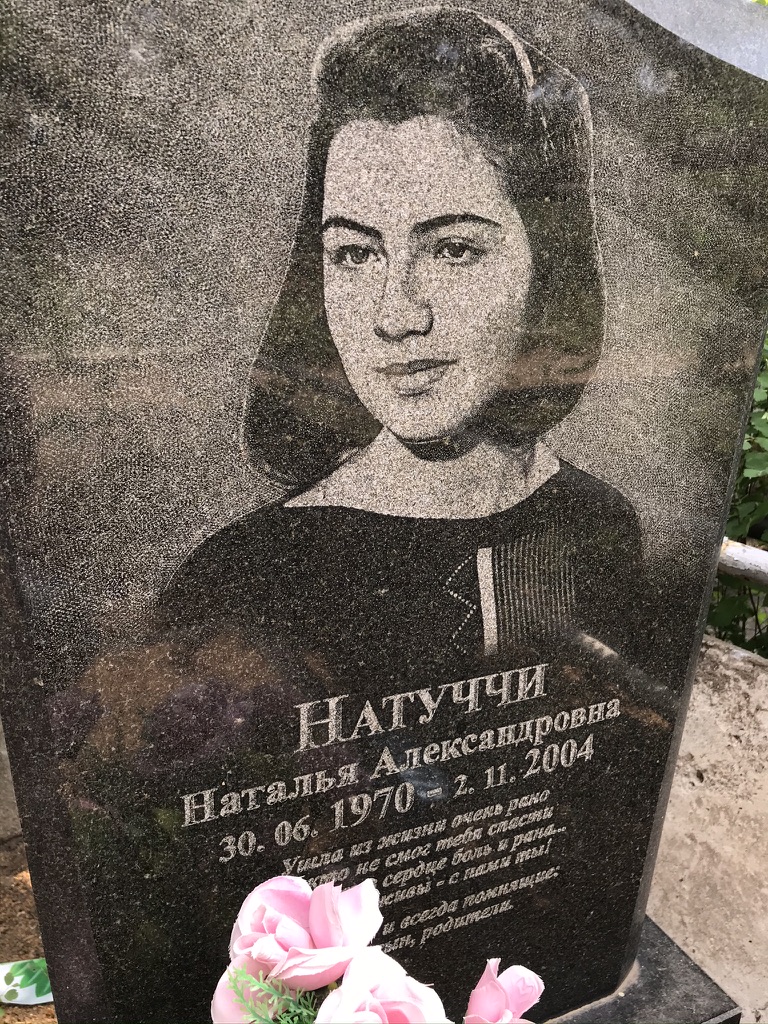
Years passed and, up to a certain point, I continued to be uninterested in this, but over time, questions of self-identification began to arise in my head – who am I, what am I, where do I come from and where am I going. And if the need to study and become something from a rational survival point of view is correct, having satisfied the lower layers of Maslow's pyramid, the time has come to deal with its upper layers. And now, when I am already deeply mired in the bureaucratic sense in my current surname, I will be working on changing it.
A Bit of Family History
At the beginning of December 2018, I finally decided to call all my relatives with the aim of compiling and documenting a unified genealogical tree, including every single family member. Of course, I had periodically asked these questions before, but I had no particular interest in further research, much less the desire to bring it all together and reflect on it.
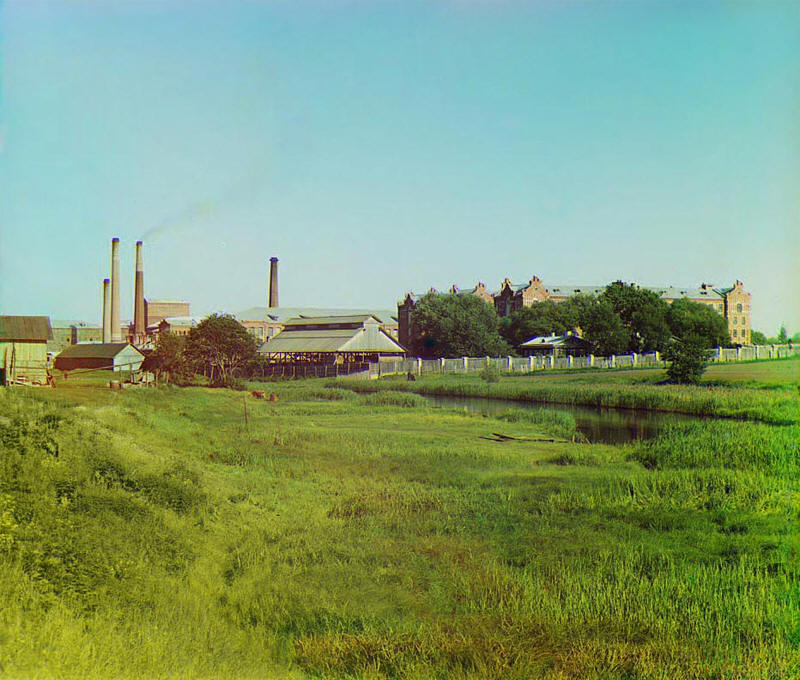
So, what did I find out: my grandfather, to whom I just devoted some time in the previous section, was born in the city of Chernyakhovsk in the Kaliningrad region, or Insterburg in East Prussia, which it still was a year before his birth. His mother and my great-grandmother – Yekaterina Alexandrovna Natucci – was born in Tver in 1922, and lived with me and my parents until 1999, when she died before my eyes. I was 7 years old then. And her father, my great-great-grandfather, also Alexander Alexandrovich Natucci – also lived and worked in Tver at the Rozhdestvenskaya Manufactory of P.V. Berg (in the photo in the center):
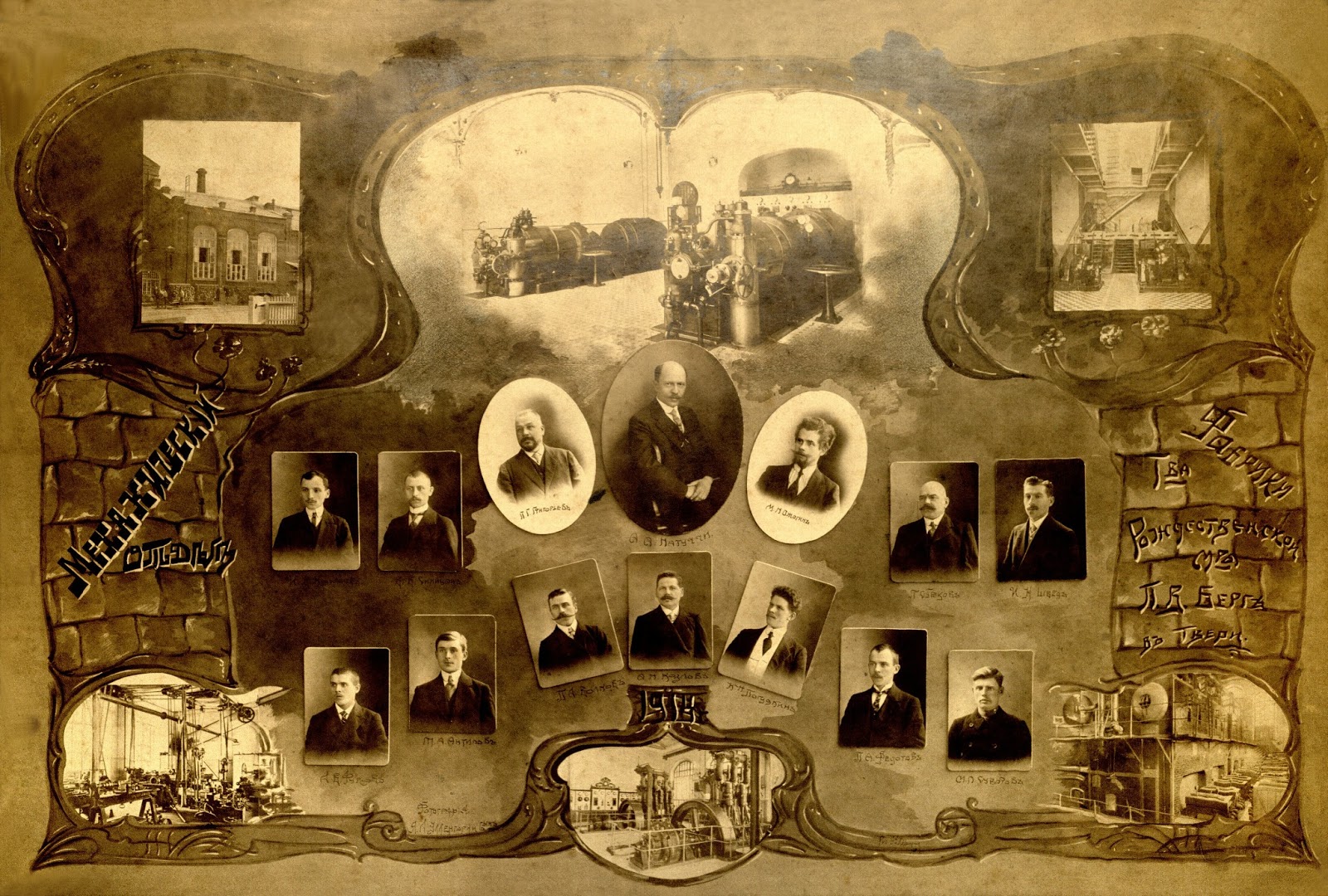
My grandfather told me about this photo, after which I decided to type "natucci tver" in Yandex, when the factory immediately appeared in the results. That's where things got really interesting: my grandfather knows almost nothing about his grandfather, and says that his cousin could help me. But while his brother – Oleg Mikhailovich Natucci – has lost his voice and is being treated while visiting his children in Ferrara, I decided to fly to Tver to visit the museum that houses this photograph and find out about him there. I'm sure that my great-grandmother, who lived with me but died, as I already said, just after I entered first grade of secondary school, could have answered many of my questions, but I came to my senses too late. And what can you expect from a seven-year-old child? God grant him to remember his own name.
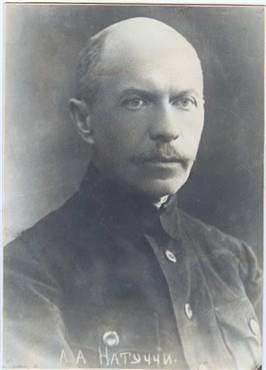
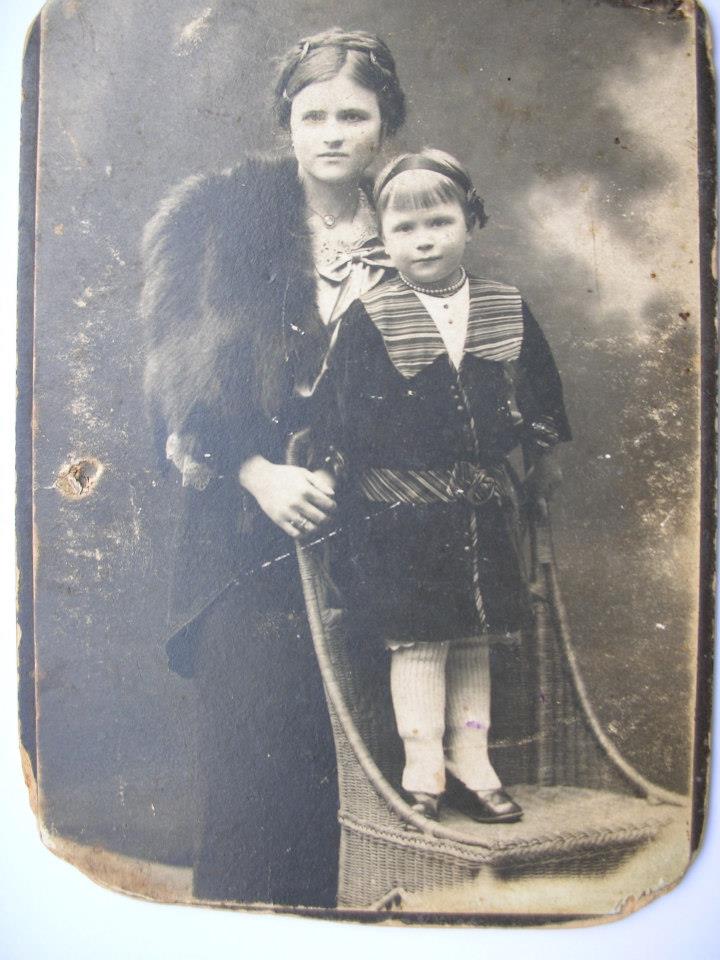
Here I come to the moment when the story has not yet unfolded further – I am writing this text now, sitting in an airplane seat Berlin - St. Petersburg, it's 21:01 Berlin time, and the story is just beginning. I hope I will be able to find out a sufficient amount of interesting details and satisfy my thirst. If not, then I will still have a backup option – a trip to Ferrara to my cousin grandfather. Or to Moscow, if he has already managed to return home.
St. Petersburg - Tver, "Sapsan"
As I already said, I got from Berlin to St. Petersburg by plane, but here I omit this part of the trip. I will only say that I was amazed by the beauty of this city – I was there for the first time.
The route between St. Petersburg and Tver, Tver and Moscow I traveled on the "Sapsan" train. This was a very interesting point of the journey for me, because I simply love trains, and especially because the Russian "Sapsan" is a German-made train "Siemens Velaro", which I ride around Germany, where they are called "ICE" (Intercity-Express). So it was interesting to observe the similar layout of the train interiors. In the two videos above you can see, among other things, the similarity in the appearance of the "Sapsan" and "ICE".
It's clear that the pricing process in Russia and Germany differs greatly, but I still want to note an interesting difference in numbers:
"Sapsan", St. Petersburg - Tver, 533 km, business class - 5719₽ = 75€
"Intercity-Express", Berlin - Hamburg, 288 km, first class - from 70€ to 100€ (with 25% discount card BahnCard 25)
At the same time, I cannot help but praise the most delightful breakfast on the "Sapsan", consisting of two courses and dessert, included in the ticket price. On the "ICE" this is already a separate service. With great pleasure I would also talk about the differences and features of these trains, but that's not what I was planning to talk about.
Tver
Fast forward to December 17, 2018, and I've already managed to visit St. Petersburg and Moscow several times, stop by Tver and Rostov-on-Don. The main city of this narrative is, of course, Tver. In Tver, of the two planned visits, I managed to complete only one: I did get to the Rozhdestvenskaya Manufactory of P.V. Berg, but not to the local history museum of the city. Alas, it was under reconstruction. I made this mistake because all museums in Tver and the Tver region are called by one name "Tver United Museum", which confused me.
Well, I'll write at least about the manufactory. To my deepest regret, since tsarist times, the manufactory has undergone a series of abusive changes, and is now in a deplorable state. Unfortunately, but not surprisingly. After its founding in 1853 by Kaulin and Zalogin, it was bought out at the end of the 19th century by Berg, but it didn't stay in new hands for long, because in October 1917 what happened happened. The Communists, of course, took away the factory, and during the existence of the USSR expanded it with extensions, additions and other changes. These additions are visible to the naked eye, because the difference in the materials used, architectural style and approach to construction are immediately striking. For better understanding, I'll give a couple of quotes from the text about the manufactory on the website called Tver Vaults [1]:
"The factory building is a complex of structures built at different (though close) times, unlike the Morozov factory, united in a complex, asymmetrical, but nevertheless very picturesque volume, reminiscent of a medieval monastery somewhere in Northern Europe. The brick style of Russian industrial architecture is generally close to the brick northern Gothic, it was followed consciously, down to the details."
"Getting acquainted with the factory, one cannot help but be struck by its resemblance to a Romanesque or brick Gothic cathedral. This resemblance is enhanced by the presence on its walls of many small details, each of which, finding itself on the huge plane of a red brick wall with face masonry, 'plays', holds the gaze and has very great significance for the artistic appearance of the building. On the eastern (late) building several balconies of fire escapes have been preserved."
It goes without saying that the extensions of the Soviet period have a purely utilitarian architectural style, which allows them to stand out against the general background. The expansion is not limited to just extensions, but also includes the elimination of other elements of the building, apparently not used during the Soviet period, such as entrances and windows, which are simply bricked up. This sacrilege can be observed in the photos below:
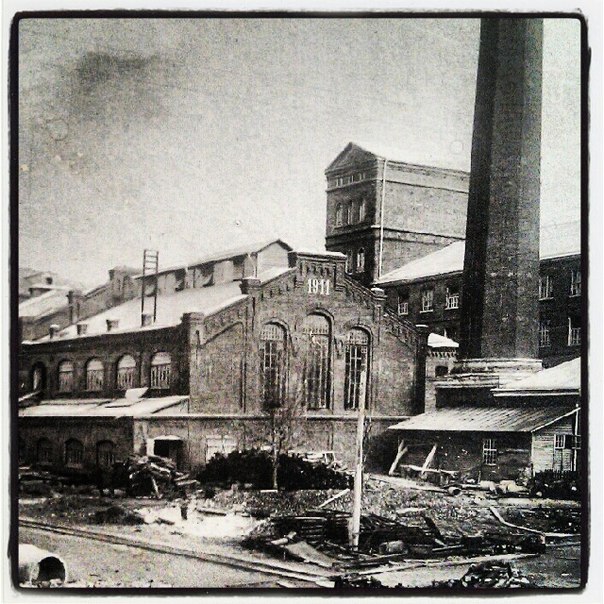
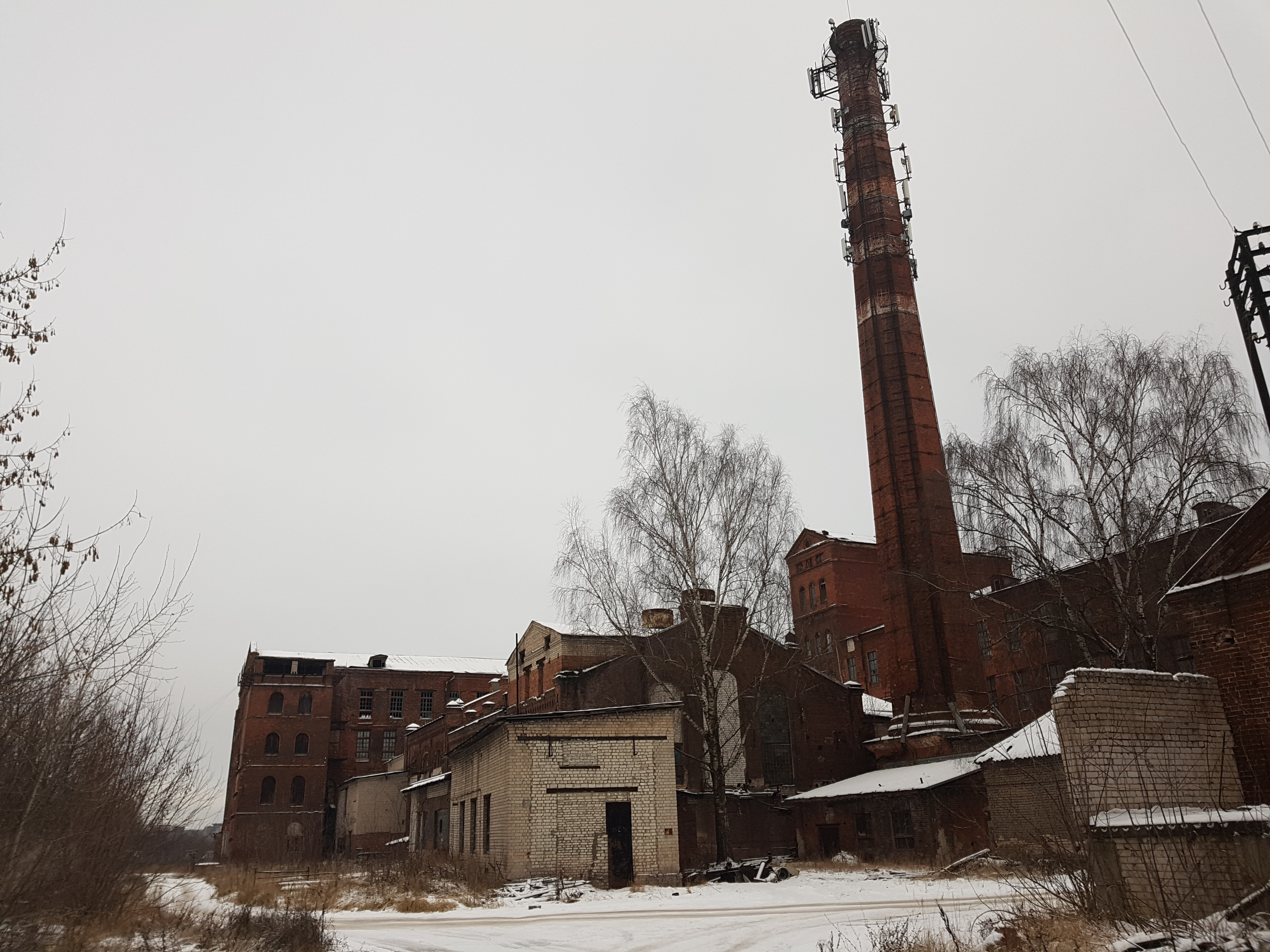
Keeping in mind the information from these two paragraphs about the architectural style in which the manufactory was originally built, and looking at these photographs side by side, I want to share the emotional component of the visit. What I felt was a kind of dissonance — seeing what this place once was, and what it has become, and trying to make sense of that gap.
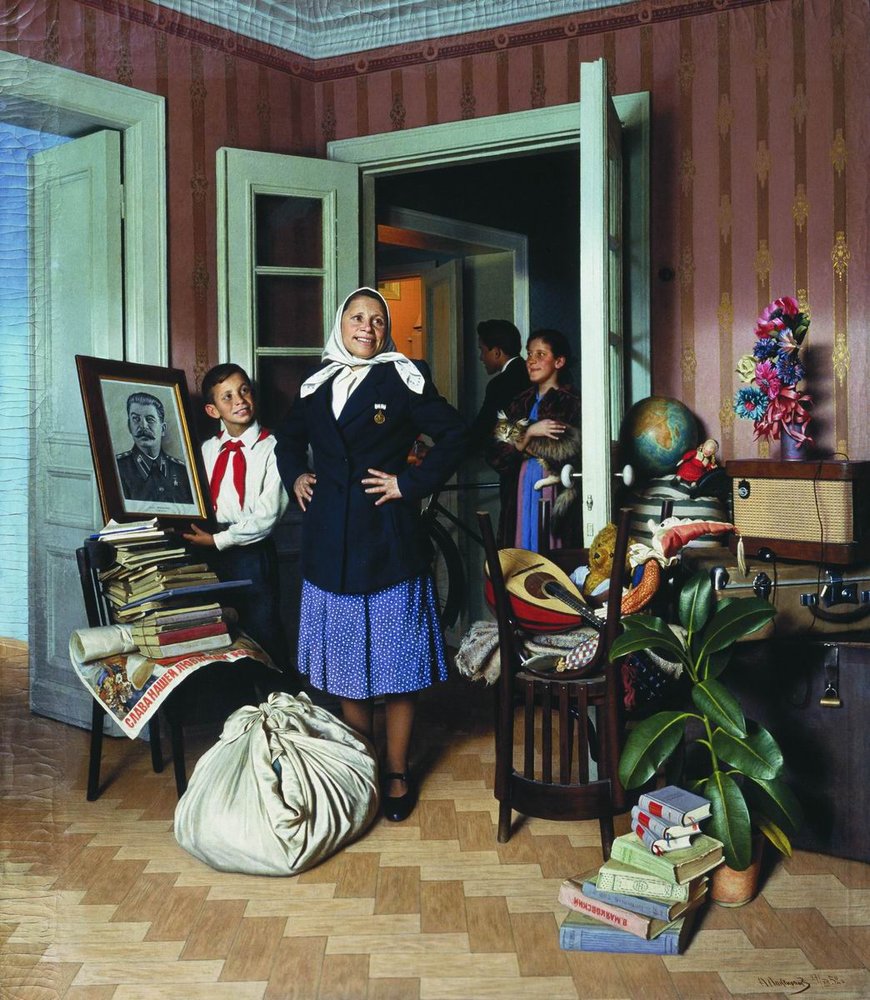
This is caused, of course, by the fact that this place is also related to me, albeit distantly – here, in this building, my great-great-grandfather worked. And therefore you already have a different attitude to the problem and the questions just beg themselves: "How do you just take and take away production from the owner?", "What the hell is there still a monument to some communist on the factory grounds to this day, who has nothing to do with the founding and development of the factory?" From a factual point of view, nothing new – we all know how the revolution went, but this element of kinship adds this emotional tint.
A Bit More About Russia in General
Before this, I had been to Russia – many times to Moscow and once each to Belgorod and Korocha, when I visited my godmother. But my trips always had a "sterile" character: in Belgorod and Korocha I was driven by car, and Moscow, they say, is not Russia at all. This time I immersed myself more deeply in Russian realities: I flew to St. Petersburg, then went to Tver by train, then again by train to Moscow, from where I flew to Rostov-on-Don. This time I was able to feel what people feel and say (I even drank vodka on the Sapsan with a local CCNA), sometimes even understand why they think what they think. Feel different attitudes of people toward me. Understand how women live in Russia. See relatives I hadn't seen for five years. This trip certainly made an impression on me and that's why I will be returning to Russia.
Summary
I didn't learn very much new – I didn't manage to sort it out once and for all, but honestly, the desire to sort it out once and for all was quite ambitious, but at least I saw this factory with my own eyes. I couldn't get inside because my trip was spontaneous in nature and, considering, in addition to this, that I still couldn't get into the local history museum, I'm planning another trip to Tver, but in summer, when the weather will be warm, having previously coordinated everything possible with the workers of the local history museum. It would be ideal to also get inside the factory itself. Of course, inside there the state of affairs is now such that you can't look at it without tears, but you need to be prepared for this, because there's nothing you can do about it (and I was prepared to see its external part like this).
References
[1] ROZHDESTVENSKAYA MANUFACTORY ("BERG'S MANUFACTORY", "KAULIN MANUFACTORY", "VAGZHANOVKA") (MID. AND END OF XIX - BEG. XX), http://tversvod.ru/page247/?full=1
[2] THREE HOUSEWARMINGS, https://enzel.livejournal.com/444719.html